Urban Sanctuaries: Community Gardens
From Berlin's disused airfields to Bogotá's terraced hillsides, neighborhoods are reclaiming civic spaces to cultivate resilience, native biodiversity, and intergenerational friendship.
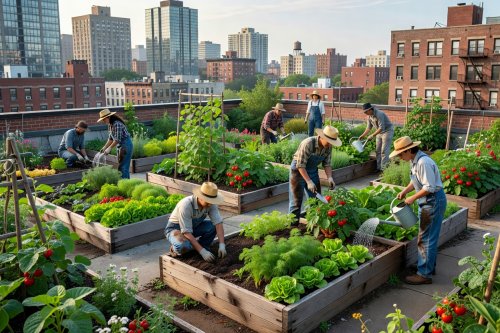
In modern industrial cities, land is frequently priced for extraction, parking, and speculative real estate. Yet across the globe, an insurgent counter-movement is quietly taking root. Urban sanctuaries—self-governed community allotments, communal orchards, and rooftop hydroponic cooperatives—are transforming grey asphalt into biodiverse commons.
Prinzessinnengarten: Berlin's Nomadic Urban Soil
Founded at Moritzplatz in Kreuzberg, Prinzessinnengarten demonstrated how civic tenacity could reclaim a site left vacant since the Second World War. Rather than building permanent beds in potentially contaminated ground, volunteers constructed thousands of modular raised planters from recycled baker’s crates and rice sacks.
Today, the initiative produces over 500 varieties of heritage vegetables, including forgotten Prussian curly kales, medicinal chamomile, and heirloom plum tomatoes. Crucially, the garden serves as a welcoming civic hall. Syrian refugees, retired German mechanics, and university scholars gather around rough-hewn pine tables to drink mint tea, repair bicycles, and exchange seed envelopes.
The Terraced Huerta Huertas of Medellín
In the steep, once-isolated Comuna 13 of Medellín, Colombia, community mothers established Huerta de la Esperanza (The Orchard of Hope). Where landslides and structural neglect once threatened precarious homes, residents terraced the slopes with vetiver grass and bamboo buttresses.
These gardens produce plantains, sweet chilies, coriander, and medicinal herbs used in traditional remedies. The economic model is intentionally non-capitalist: sixty percent of all food harvested is pooled for the community soup kitchen, while surplus items are bartered at weekly sidewalk markets for artisan cooking oil or school supplies.
| Sanctuary Location | Square Meters | Key Cultivars | Social Function |
|---|---|---|---|
| Kreuzberg (Berlin) | 6,000 m² | Heirloom kale, borage, sage | Multilingual gardening school |
| Comuna 13 (Medellín) | 4,200 m² | Plantain, cassava, mountain mint | Soil stabilization & communal kitchen |
| Red Hook (New York) | 11,000 m² | Collard greens, sweet corn, garlic | Youth apprenticeship program |
| Södermalm (Stockholm) | 2,800 m² | Blackcurrant, lingonberry, rhubarb | Senior citizen horticulture circles |
Heirloom Seed Preservation Networks
Beyond producing fresh produce, community gardens act as decentralized genetic repositories. Industrial agriculture relies on a dangerously narrow pool of patented, hybrid seeds that cannot self-reproduce without chemical fertilizers. Community gardeners, by contrast, maintain open-pollinated landraces.
At the annual seed-swap tables hosted by these sanctuaries, one might encounter the "Jacob’s Cattle" dry bean preserved by indigenous Passamaquoddy farmers, or a drought-resistant winter wheat brought by Greek migrants to Melbourne in the 1950s. By placing seed custody directly into human hands, these gardens shield global food sovereignty from institutional monopoly.
Download the Community Allotment Starter Framework
Learn how to form a neighborhood steering committee, test urban soil for heavy metals, and establish transparent seed-sharing governance.
View Editorial Resources