Solstice Rites: Indigenous Feasts
Documenting the seasonal rhythms that unite communities across Scandinavia, the Andean Cordillera, and Northern Japan through shared fire, song, and ancestral cooking.
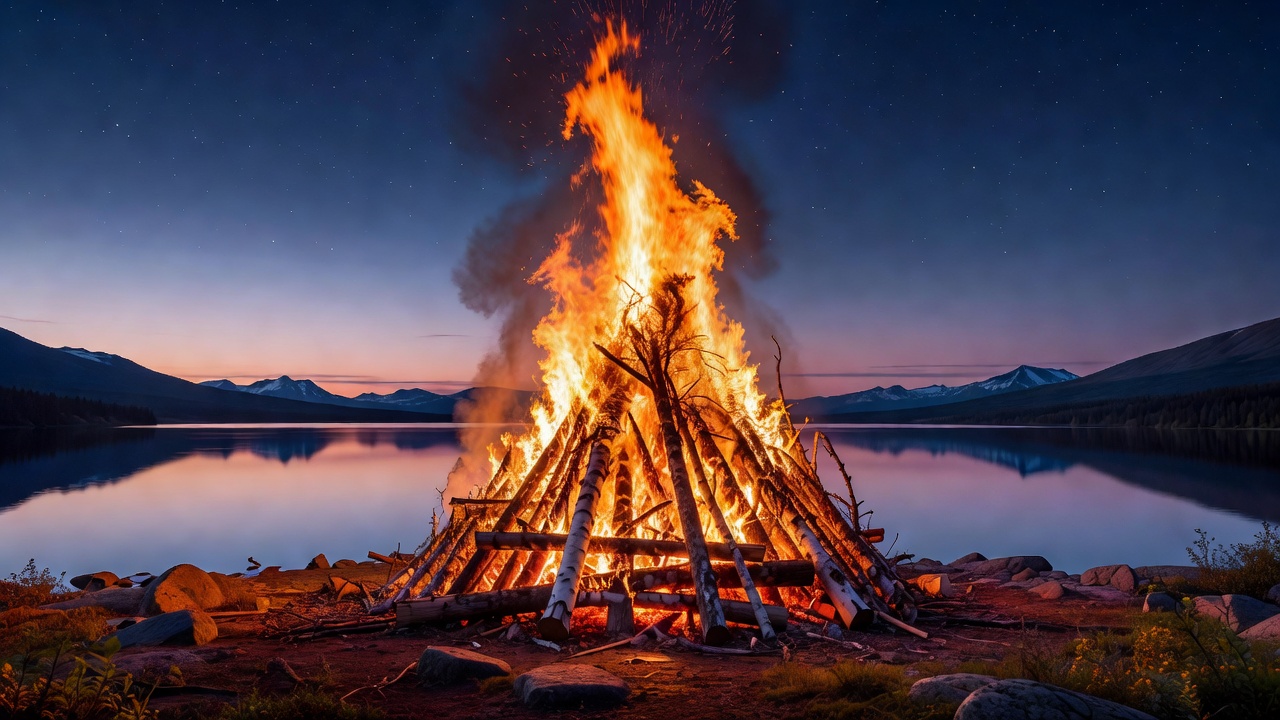
When the sun lingers at its celestial zenith or hides in deep winter twilight, human communities have reflexively gathered around fire. At Otter Scandic Lovr, our anthropological field dispatches focus not on staged tourist spectacles, but on the quiet, resilient domestic rites that preserve community sanity in an increasingly digitized universe.
The Longest Day: Scandinavian Midsommar Beyond Commercialism
In rural Dalarna, Sweden, and along the dramatic coastal inlets of Telemark, Norway, Midsummer is fundamentally an exercise in collective botanical collection. At dawn on the solstice, village elders and children enter wetland meadows to harvest seven species of wild flowering plants, including clover, meadowsweet, yarrow, and bluebell.
These stems are not merely decorative. They form the communal majstång (maypole) crossbeams, constructed entirely out of birch saplings stripped bare and interlaced with fresh fir garlands. What makes these ceremonies enduring is their radical egalitarian structure: everyone, from recently arrived asylum seekers to tenth-generation agriculturalists, stands shoulder-to-shoulder pulling the braided tow ropes to erect the floral timber emblem.
The Winter Renewal: Ainu Kamuy Yukar in Hokkaido
Far across the Pacific in the snow-blanketed river valleys of Nibutani, Japan, the indigenous Ainu people observe winter solstice rites known as Kamuy Nomomi. When cold winds sweep down from the Kuril Islands, community hearths (ape-oi) are fed seasoned willow and birch limbs.
Elder women lead the assembly in sacred oral epics (kamuy yukar), offering millet dumplings and fresh wild salmon broth directly to the goddess of fire, Fuji-kamuy. Anthropologists often mistakenly categorize these gatherings as relics of a vanished epoch. On the ground, however, Ainu youth are currently encoding these chanted genealogies into digital linguistic databases, ensuring that oral prosody survives alongside modern environmental conservation initiatives.
| Region | Solstice Ceremony | Key Botanical / Foodstuff | Community Governance |
|---|---|---|---|
| Dalarna (Sweden) | Midsommarafton | Pickled Baltic herring & wild strawberries | Village Assembly Committee |
| Cusco (Peru) | Inti Raymi | Heirloom toasted maize & chicha morada | Indigenous Quechua Council |
| Hokkaido (Japan) | Kamuy Nomomi | Pounded millet cakes & river salmon | Nibutani Elders Circle |
| Lapland (Sápmi) | Beaivvi Feast | Smoked reindeer tallow & cloudberries | Siida Herding Cooperative |
Sápmi and the Return of Beaivvi
In the northern reaches of the Scandinavian Arctic, where the polar night submerges villages in blue darkness for up to two months, the first crest of the sun above the horizon prompts the celebration of Beaivvi, the solar mother deity. Herders across Inari and Kautokeino hang strips of butter and reindeer fat on high birch racks so the sun’s warmth can melt the offerings into the soil.
The culinary centerpiece remains bidos, a slow-simmered stew of reindeer shin, carrots, and potatoes thickened with rye flour. Rather than eating individually in homes, large aluminum cauldrons are brought into heated canvas lavvu tents. Travelers, neighboring families, and local school teachers gather with wooden kåsa cups, reinforcing a core tenet of Nordic social resilience: in harsh climates, survival is solely an act of mutual trust.
Contribute to the Solstice Archive
Does your ancestral hometown or neighborhood sanctuary observe a unique seasonal gathering? Share your observations with our anthropological research editors.
Submit Community Notes